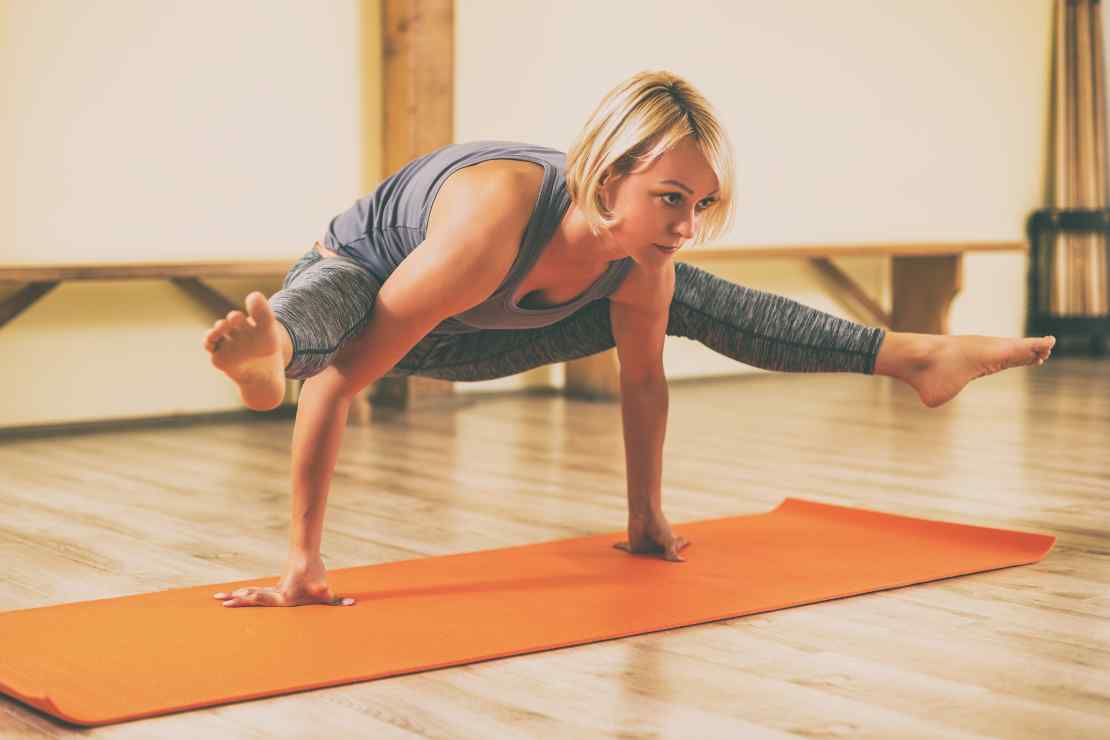
One such advanced arm balance pose in yoga is the so-called Fire Pose or Tittibhasana. This pose takes its name from two Sanskrit words, namely, Tittibh, which means a small, sparkly insect, and Asana means pose, so the name of the pose represents inner light and strength.
Looking quite daunting at first glance, Tittibhasana, developed with guidance and a lot of diligent practice, may serve as a light to both your body and your soul.
This paper is going to discuss all aspects of Tittibhasana, that is, myth, preparations, advantages, and risk factors, so that you can safely incorporate it into your yoga experience.
What is Tittibhasana (Firefly Pose)?
Tittibhasana (Firefly Pose) is a posture that is hand-balancing pose, and it looks like something trying to fly like a firefly.
It builds the arms, core, and inner thighs as well as raises concentration and balance. Beautiful in the Vinyasa and Ashtanga yoga traditions, the pose is also light in the literal and figurative sense.
Tittibhasana is not an exercise of power but a show of preparedness, belief, and elimination of fear.
Mythological Significance of Tittibhasana
The pose is related to a myth of two little birds of fire (Tittibhas) in Indian tales that have their eggs endangered by the huge ocean.
They prayed to the gods when the ocean washed their eggs away. Lord Vishnu was amused at the courage in them and was able to retrieve the eggs, teaching the lesson that even small creatures are able to demand justice and can create a difference.
What this story symbolizes is a reminder to practitioners that inner strength and light are much stronger than the limitations we perceive to exist, which is one of the teachings of Tittibhasana.
Preparatory Poses for Tittibhasana
In preparation for Tittibhasana, warm up wrists, hamstrings, hips, and core. Some preparatory postures are:
- Malasana (Garland Pose)—Open the hips and the inner thighs.
- Bakasana (Crow Pose)—Builds arm balance confidence.
- Utthita Hasta Padangusthasana—Strengthen the hamstring and leg control.
- Utkatasana (Chair Pose)—Engages core and strengthens thighs.
- Navasana (Boat Pose)—Activates the deep core muscles.
- Supta Padangusthasana—Stretches the hamstrings.
- Paschimottanasana—Conditioning of the posterior chain before it is forced.
Strength and stability in these poses form the basis of the alignment and muscle usage required to enter into the safe transition of Tittibhasana.
Step-by-Step Guide to Perform Tittibhasana
- Beginning position Squat (Malasana): Stand so that the feet are a bit broader than the hips. Squat, keeping your knees bent, and bring your hips downwards between your knees into a low squat position.
- Slide Your Shoulders Behind Your Knees: Bend forward and shake each arm down through your thighs until your shoulders or triceps travel fast against the backs of your knees.
- Put Your Hands on Floor: Keep your fingers apart and place your hands, shoulders broad apart, behind your heels.
- Lean Backward: You have to begin to lean backward until you balance on your palms, lifting your feet.
- Extend the Legs and engage the Core: This is the position where your legs should be straight forward and remain raised and firm. Make sure to flex the feet and keep the inner thighs activated to avoid splaying.
- Extend the Legs and engage the Core: This is the position where your legs should be straight forward and remain raised and firm. Make sure to flex the feet and keep the inner thighs activated to avoid splaying.
- Lift the hips: Hips are pulled up by drawing the tailbone under to provide some counterbalance to the legs.
- Hold the Pose: Hold your breath and make 3-5 breaths. Get out of the pose gradually by bending the knees and freeing the feet from the ground.
Common Mistakes and How to Fix Them
Hands: Use palms that are shoulder-width distant. Bigger hands increase the difficulty of balancing.
Weakened Core: A weak core will result in saggy hips. Stimulate the navel around the spine.
Legs Too Low: The aim here is to raise the legs in a way parallel to the floor. Use your thighs by squeezing.
Bent elbows: Elbows should be near the body to be structured and safe.
When you are not flexible, the injury can happen through pushing. Take advantage of props or prepare posing poses.
The awareness-induced correction and alignment are the most important elements that will make the Firefly Pose safer and sustainable.
Adjustments & Modifications
- Blocks Under Hands: Raising the floor can make balance easier.
- Strap Around the Arms (Upper): Avoid splaying elbows and hold them together.
- Bent-Knee Version: Instead of straightening the legs fully, keep them bent and work on hip lift first.
- Wall Support: Practice near a wall behind you to avoid falling backward.
A yoga teacher or partner can assist by holding you under your shoulders as you lift your legs, providing security while you find your balance.
Tittibhasana for Beginners
Tittibhasana, or Firefly Pose, is an advanced arm balance that builds core strength, flexibility, and focus. For beginners, start by opening the hips with poses like Malasana (Garland Pose) and strengthening the arms with Plank variations. Use props like blocks under the hands for support. Focus on engaging the core and lifting through the legs while keeping a steady breath. With consistent practice and patience, beginners can safely progress toward the full expression of Tittibhasana, gaining both confidence and body awareness along the way.
Physical and Mental Benefits
Physical and Mental Benefits of Tittibhasana (Firefly Pose)
Physical Benefits:
- Strengthens Arms and Wrists: Holding the body weight develops powerful upper body strength.
- Tones the Core: Engages deep abdominal muscles, promoting stability and balance.
- Improves Flexibility: Opens hips, hamstrings, and groin for enhanced mobility.
- Enhances Balance and Coordination: Boosts overall body awareness and control.
- Stimulates Organs: Aids digestion and detoxification through abdominal engagement.
Mental Benefits:
- Boosts Confidence: Overcoming the challenge builds inner strength and resilience.
- Sharpens Focus: Demands complete concentration, enhancing mindfulness.
- Relieves Stress: Promotes mental clarity and calm through focused breathing.
- Encourages Patience: Teaches perseverance and discipline during practice.
Contraindications & Safety Tips
Contraindications & Safety Tips for Tittibhasana (Firefly Pose)
Contraindications:
- Wrist or Shoulder Injuries: Avoid if recovering from strain or injury, as pressure may worsen the condition.
- Lower Back Issues: Those with back pain or herniated discs should skip this pose.
- Hamstring Tears: Do not attempt if dealing with tight or injured hamstrings.
- Pregnancy: Not recommended due to intense abdominal and pelvic engagement.
Safety Tips:
- Warm Up Thoroughly: Prepare with hip openers and hamstring stretches.
- Use Props: Practice with blocks under hands or cushions for support.
- Engage the Core: rotect the lower back by activating abdominal muscles.
- Listen to Your Body: Never force the pose—progress gradually to avoid injury.
- Practice Under Guidance: Beginners should learn under a qualified teacher for proper alignment and support.
Conclusion
Tittibhasana, or Firefly Pose, is more than just a physical arm balance—it is a journey toward inner strength, confidence, and focus. With mythological roots symbolizing courage and transformation, this pose demands dedication, proper preparation, and mindful practice. By strengthening the core, improving flexibility, and sharpening mental clarity, Tittibhasana becomes a powerful tool in your yoga path. Always approach it with patience, respect your body’s limits, and use props or modifications to ensure a safe and rewarding experience.
FAQs
1. Is Tittibhasana suitable for beginners?
While Tittibhasana is an advanced pose, beginners can start with preparatory poses and use modifications to gradually build strength and flexibility.
2. What are the key muscles used in Tittibhasana?
Tittibhasana primarily engages the core, arms, wrists, inner thighs, and hip flexors.
3. Can I practice Firefly Pose if I have tight hamstrings?
If your hamstrings are tight, practice stretches like Paschimottanasana and Supta Padangusthasana first. Use bent-knee variations or props for support.
4. How long should I hold Tittibhasana?
Start with 3–5 breaths. As strength and balance improve, you can increase the hold duration gradually.
5. What should I do if I keep falling back in the pose?
Use a wall behind you or have a teacher assist. Focus on core engagement and lift the hips slightly to maintain balance.
6. How often should I practice to master Tittibhasana?
Consistency is key. Practice 3–4 times a week along with strengthening and flexibility routines to safely work toward mastering the pose.