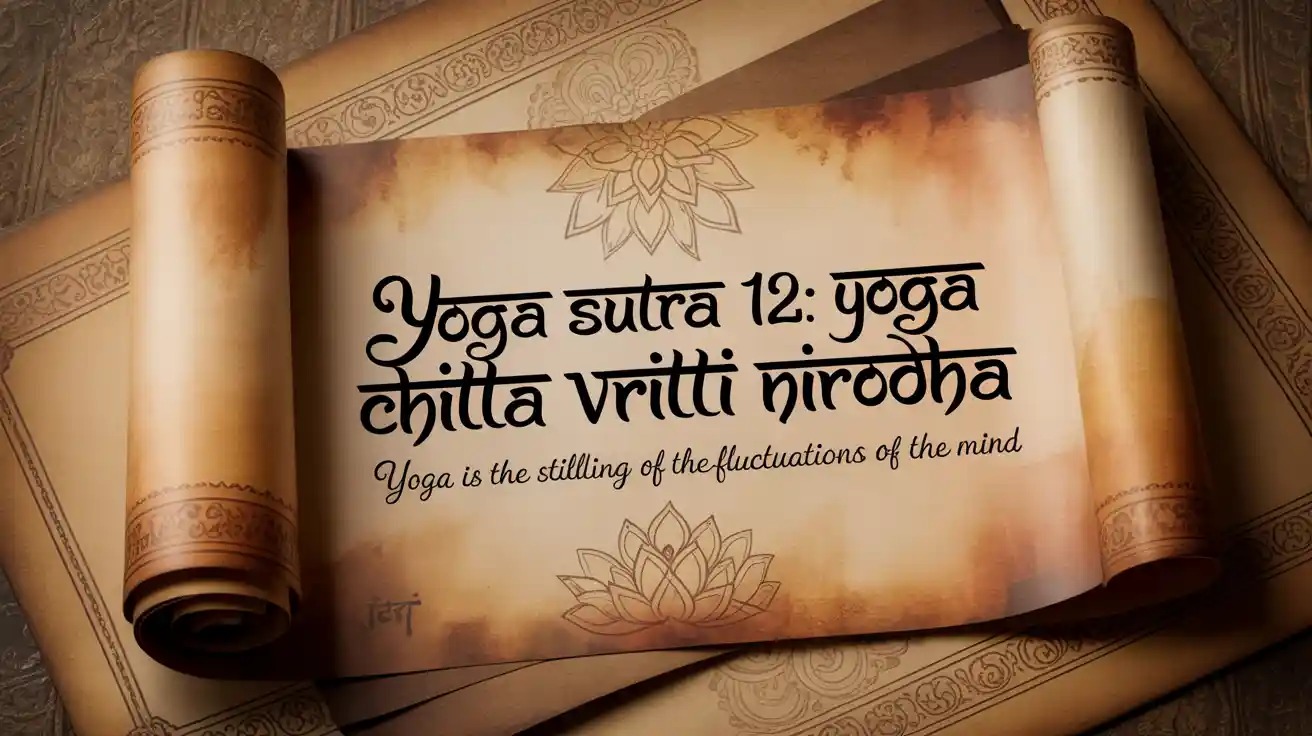
 Among the 196 verses compiled by sage Patanjali in the Yoga Sutra, one stands out as the very essence of yoga philosophy: “Yogas Chitta Vritti Nirodha.” This profound statement, found in the second verse of the first chapter, defines the true purpose of yoga. It goes beyond postures and physical fitness, pointing instead to the mastery of the mind.In this blog, we will explore the deep meaning of Yogas Chitta Vritti Nirodha, break it down word by word, and understand how it shapes the practice of yoga in daily life.
Understanding the Yoga Sutra of Patanjali
The Yoga Sutra of Patanjali, composed more than 2,000 years ago, is a timeless guide that reveals the true essence of yoga. Unlike the modern focus on physical postures, Patanjali begins with the mind. In Sutra 1.2, “Yogas Chitta Vritti Nirodha,” he defines yoga as the calming of mental fluctuations. This teaching emphasizes that yoga is not just about movement or flexibility but about cultivating inner stillness and awareness.
When the mind becomes quiet, like a calm and steady lake, the deeper Self naturally shines through. In our fast-paced world filled with stress and distractions, this ancient wisdom feels more relevant than ever. Patanjali’s words remind us that true peace, clarity, and freedom are not found in external achievements but within ourselves-through the stillness of the mind.
Word-by-Word Meaning of Yogas Chitta Vritti Nirodha
To fully grasp this Yoga Sutra, let’s break down the Sanskrit words:
- Yoga – Union, discipline, or integration.
- Chitta – The mind-stuff, including thoughts, memories, emotions, and impressions.
- Vritti – Fluctuations, modifications, or waves that disturb the mind.
- Nirodha – Restraint, stilling, or cessation.
Together, Yogas Chitta Vritti Nirodha means: “Yoga is the cessation of the fluctuations of the mind.”
The Role of the Mind in Yoga

The human mind is restless by nature. It jumps from one thought to another, influenced by desires, fears, and external stimuli. In yogic philosophy, this constant movement of the mind—vrittis—creates suffering and prevents us from experiencing peace.
The Yoga Sutra teaches that by practicing yoga, we can restrain these fluctuations, leading to clarity, stability, and inner freedom.
Why Yogas Chitta Vritti Nirodha is the Core of Yoga
While many people associate yoga with physical postures, Patanjali makes it clear that the true essence of yoga lies in the mind. Mastering asanas alone cannot bring liberation if the mind remains restless and dominated by chitta vrittis—the constant waves of thoughts, desires, and distractions. Patanjali emphasizes that unless we learn to quiet these fluctuations, yoga remains incomplete.
This is why Yoga Sutra 1.2, “Yogas Chitta Vritti Nirodha,” is often regarded as the very definition of yoga. It reveals the ultimate goal: reaching a state of inner silence where the mind no longer dictates our reality. In this stillness, we experience clarity, freedom, and union with the higher Self. Thus, yoga is not just a physical discipline but a profound journey toward mental mastery and spiritual awakening.
The Five Types of Chitta Vrittis
According to the Yoga Sutra, there are five types of mental modifications, both painful and non-painful:
- Pramana (Right Knowledge) – This refers to correct understanding gained through direct perception, logical inference, and reliable testimony. It helps us see reality as it is.
- Viparyaya (Misconception) – This is false knowledge or misunderstanding, where the mind perceives something incorrectly, leading us away from truth.
- Vikalpa (Imagination) – This is the creation of ideas, fantasies, or concepts without any basis in reality, which can distract us if not guided wisely.
- Nidra (Sleep) – Sleep is a state where the mind becomes inactive, yet it still counts as a modification because it affects our consciousness and awareness.
- Smriti (Memory) – These are impressions or recollections of past experiences that continuously influence our present thoughts and actions.
Yoga does not eliminate these functions but teaches us to regulate them. Through Yogas Chitta Vritti Nirodha, the mind becomes a tool rather than a master.
Practical Steps to Apply Yogas Chitta Vritti Nirodha
The Yoga Sutra outlines an eightfold path (Ashtanga Yoga) that helps in achieving mental stillness:
- Yamas – Ethical principles (non-violence, truthfulness, etc.)
- Niyamas – Self-disciplines (purity, contentment, self-study)
- Asana – Steady and comfortable postures
- Pranayama – Regulation of breath
- Pratyahara – Withdrawal of senses
- Dharana – Concentration
- Dhyana – Meditation
- Samadhi – Absorption into pure consciousness
Each limb contributes to the state of Yogas Chitta Vritti Nirodha, guiding practitioners from the physical to the spiritual.
Meditation and the Cessation of Fluctuations
One of the most powerful practices for achieving Yogas Chitta Vritti Nirodha-the stilling of the mind’s fluctuations-is meditation. When we sit in silence, focus on the breath, and simply observe the stream of thoughts without clinging to them, the restless waves of the mind begin to settle. Just as muddy water clears when left undisturbed, the mind too becomes calm and transparent when given space and awareness.
The Yoga Sutra teaches that meditation is not about forcefully stopping thoughts or suppressing the mind. Instead, it is about cultivating presence and allowing thoughts to dissolve naturally as awareness deepens. Over time, this gentle practice transforms the mind from a turbulent ocean into a clear, reflective surface, revealing inner peace and the true Self within.
The Benefits of Practicing Yogas Chitta Vritti Nirodha
When the teachings of this Yoga Sutra are applied, profound transformations occur:
- Mental Clarity – Freedom from confusion and overthinking.
- Emotional Balance – Reduced anxiety, anger, and stress.
- Self-Realization – Experiencing the true Self beyond the ego.
- Inner Peace – A deep sense of calm regardless of circumstances.
- Spiritual Growth – Moving toward liberation (moksha).
These benefits show that Yogas Chitta Vritti Nirodha is not just philosophy—it is a practical path for modern life.
Challenges in Practicing Yogas Chitta Vritti Nirodha
While the concept is simple, the practice is challenging. The restless mind resists stillness, and modern distractions make it harder.
The Yoga Sutra suggests consistency (abhyasa) and detachment (vairagya) as the twin qualities needed to overcome these challenges. With patience and perseverance, mastery over the mind becomes possible.
Yogas Chitta Vritti Nirodha in Daily Life
This Yoga Sutra is not limited to meditation halls or yoga mats. It can be practiced in daily life by:
- Observing thoughts before reacting.
- Practicing mindfulness in daily tasks.
- Detaching from unnecessary desires.
- Cultivating stillness even in busy environments.
When applied consistently, Yogas Chitta Vritti Nirodha turns every moment into yoga.
Conclusion
Yoga Sutra 1.2: Yogas Chitta Vritti Nirodha is the heart of Patanjali’s teachings. It reminds us that yoga is not about physical flexibility but about mastering the mind. By restraining mental fluctuations, we open the door to peace, clarity, and ultimate liberation.
This timeless wisdom continues to guide seekers across the world, proving that the true journey of yoga begins within.
FAQs
1. What does Yogas Chitta Vritti Nirodha mean in simple terms?
It means yoga is the practice of calming the restless mind and attaining inner stillness.
2. Why is Yoga Sutra 1.2 so important?
It defines yoga at its core-beyond postures, it is about controlling mental fluctuations to achieve peace.
3. How can I practice Yogas Chitta Vritti Nirodha daily?
Through meditation, mindfulness, ethical living, and following the eight limbs of yoga.
4. Can beginners understand and apply this Yoga Sutra?
Yes. Even simple practices like observing the breath or being mindful of thoughts are steps toward it.
5. What happens when the mind achieves Yogas Chitta Vritti Nirodha?
The mind becomes clear, calm, and steady, allowing one to experience the true Self and inner freedom.