
Long ago, yoga was practiced in connection with nature, rhythm, and energy. Just as the sun makes us aware of time for us, the moon does that for our emotional body, our subtle body.
With a variety of poses, yoga is an incredible way to mindfully align your practice and stay in tune with the phases of the moon, connecting with your body, mind, and spirit, while bringing yourself into physical alignment with the energy in the universe.
In this blog, we look into how the eight moon phases affect us and how you can bring yoga, breathwork, and meditation in tune with lunar energy for your overall well-being.
The Science and Spirituality of Lunar Phases
From a scientific perspective, tides are caused in part by the moon’s gravitational pull, and because our bodies are more than 70 percent water, our physiology and mood can be affected by it as well.
There are different energetic qualities of the moon, different phases of the moon spiritually, and different things we can associate with the moon, so there’s more useful energy around specific phases than others.
Through yoga, we can tune into these energies and deepen the awareness of ourselves and our healing.
Understanding the 8 Moon Phases
- New Moon: A period for reflection and silence. This is the time to slow down first and then set clear intentions on what we really want to accomplish in our lives.
- Waxing Crescent: A time for sowing seeds and setting movement in motion. The energy starts to be subtly built up for those routines that support the intentions.
- First Quarter: Action energy soars. Face challenges head-on, building strength through dynamic yoga and mental resilience.
- Waxing Gibbous: Time for refinement. Go back with awareness and precision in adjusting your intentions and efforts.
- Full Moon: Its energies are at their peak. Emotions grow in intensity with an acute need to release, express gratitude, and celebrate one’s growth.
- Waning Gibbous: Integrate lessons learned and the practice of forgiveness and gratitude.
- Last Quarter: Release whatever doesn’t serve you anymore. Choose simplicity, clarity, and emotional cleansing.
- Waning Crescent: A sacred pause before commencement. Deep rest, silence, and spiritual reflection are of the essence.
Lunar Energy and Human Behavior
Lunar cycles affect our energy levels, emotional states, and the way we tend to make decisions.
For instance, during a Full Moon, people tend to experience overly heightened emotions, vivid dreams, or even an inability to sleep through the night.
On the other hand, the New Moon is a time for isolation, meditation, and setting a fresh intention.
Its waxing phases bring forth energy, while waning ones tend to be reflective, with human behavior somewhat mimicking these cycles.
Historical Connection Between Moon and Yoga
Traditional yogic practices regarded lunar rituals as an integral component of their practices and day-to-day routines.
The moon, according to the Tantra, Hatha Yoga, and Ayurveda, was the symbol of feminine energy, or Shakti.
Yogis would arrange their Sadhna (Spiritual Practice) according to the lunar calendars to create or enhance prana (life force energy), intuition, and interior stillness.
Historical texts describe how the phases of the moon affect subtle body energies towards spiritual growth.
Benefits of Practicing Yoga with the Moon Cycles
- Emotional Balance: Yoga does help to temper the blows of emotional fluctuations when the practice is being done in alignment with a moon-based calendar.
- Heightened Intuitive Awareness: Working in harmony with the lunar cycles assists one in getting better in tune with one’s intuitive insights and inner guidance.
- Deeper Meditative States: The effect of the moon phases on meditation practices results in a deeper state of relaxation and focused attention.
- Improved hormonal regulation (female-laced): Yoga, being aligned with lunar cycles, may be good for hormonal health, hence influencing menstrual cycles.
- Energy Management: Finding out about the moon’s energy can allow the person to sort out how to enhance the use of their energy. Whether that is physical or mental, for carrying out day-to-day activities and/or rest.
- Spirituality based on natural cycles: Yoga with the moon will provide an experience that builds a sense of spirituality based on its connectivity to nature and its rhythms.
Yoga Practices for Each Moon Phase
All moon phases and the time of day offer various practices, such as
- New Moon: Slow, calming yin yoga, yoga nidra, journal with sankalpa (intention)
- Waxing Crescent: Vigorous vinyasa flows and core conditioning exercises.
- First Quarter: Warrior sequences, standing balances to fortify the mind.
- Waxing Gibbous: Fine-tune poses, including revolved triangle and half-moon.
- Full Moon: Moon Salutations, chanting, and heart-opening backbends.
- Waning Gibbous: Seated forward bends and grateful meditations.
- Last Quarter: Twists and detoxifying flows, release rituals.
- Waning Crescent: Restorative yoga, long Savasana, and Pranayama.
Breathwork and Meditation for Lunar Phases
In tandem with meditation, breathwork by the lunar phases might double in power. Each phase possesses an energetic tone that one may access with proper Pranayama and meditation.
- During the New Moon, Nadi Shodhana should be practiced to maintain equilibrium within and to make intentions.
- Waxing Moon: Kapalabhati is employed to energize and take action.
- Full Moon: Chandra bhedana serves to cool down the body and calm the mind.
- Waning Moon: Use Bhramari to help in emotional healing and clearing out mental clutter.
Moon Salutations (Chandra Namaskar)
Unlike Surya Namaskar (Sun Salutations), which invigorates the body, Chandra Namaskar soothes and cools. It is best done in the evenings or on Full and New Moons.
The Practice Includes:
- Side body stretches
- Gentle backbends
- Forward folds
- Hip openers
The flow consists of 14 poses for the 14 lunar days of the moon, with the pranayama-bhavana (breath and awareness) to balance ida (moon) and pingala (sun) nadis.
Ayurveda and Moon Phases
According to Ayurveda, the moon is the conveyor of ojas, the vital essence of life. The phases of the moon play a role in setting the mood for the exercise of the three doshas:
- New Moon: All Vata-pacifying practices are good. Ground the body with food such as roots, vegetables, and oils like sesame.
- Waxing Moon: In the increase of energetic quality, kapha should be stimulated by energizing asanas and herbs such as ginger.
- Full Moon: Pitta tends to rise, so engage in cooling pranayama and eat cooling foods like cucumber and mint.
- Waning Moon: Backward to the mode of Vata pacifying, reduce overstimulation, and concentrate on stability.
Some herbs like Ashwagandha (adaptogenic), Shatavari (reproductive tonic), and Brahmi (mental clarity) can support your lunar Ayurvedic cycle.
Common Mistakes When Practicing with the Moon
- New/Waning Moon intense flows: Choose gentle, introspective practices during these phases to maintain energetic balance.
- Ignoring fatigue: Pushing through fatigue ignores your body’s needs and risks burnout and reduced effectiveness.
- Not setting intentions: Neglecting to set intentions during the moon phases wastes precious opportunities for reflection and growth.
- Full Moon Sun Salutations: Vigorous flows set under the energy of the Full Moon can wreak havoc on stimulation; choose slow, grounding practices instead.
- Doing away with rest phases: The constant doing strains the body. Mix in calm, restorative practices for a change here and there.
Aligning Your Chakras with the Moon Phases
Each moon phase can be aligned with specific chakras, so you can work with their energetic qualities.
- New Moon—Root (Muladhara): Embrace grounding poses and affirmations such as “ I am safe.”
- First Quarter—Solar Plexus (Manipura): Empower yourself with core work and the mantra, “I do.”
- Full Moon—Heart (Anahata): Work on compassion and backbends.
- Last Quarter—Throat (Vishuddha): Practice lion’s breath and shoulder stand. Affirm, “I release.”
Add mudras and color visualization as a practice to augment the chakra-lunar symphony.
Moon Yoga for Women’s Health
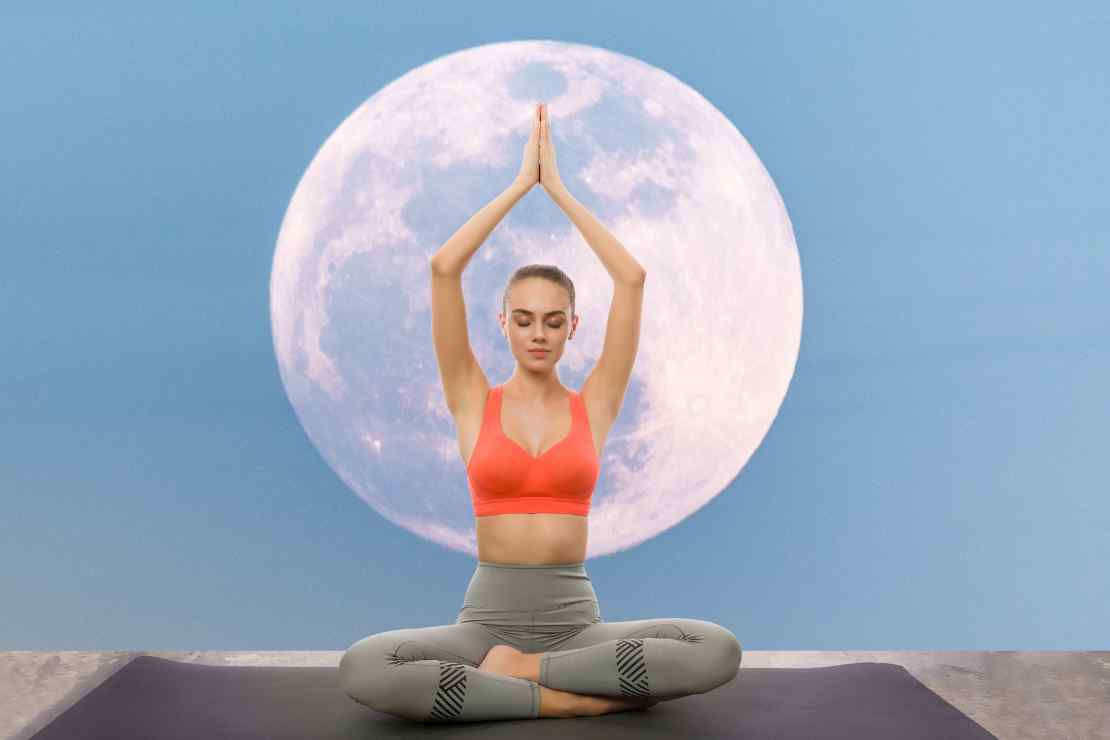
A woman’s menstrual rhythm follows a lunar cycle of approximately 28 days. Syncing yoga with lunar phases can:
- Alleviates Premenstrual Syndrome (PMS) and menstrual cramps.
- Helps in fertility and balancing hormones.
- Improve emotional well-being in menopause.
During the menstrual and the new and waning phases, gentle yoga can work wonders and give relief.
Ovulation generally falls on the Full Moon, considered the type of peak energy for heart-opening sequences.
Cyclical living is the way to go to reconnect with your internal rhythm.
Final Thoughts: Living in Lunar Harmony
Yoga with moon phases is an incredibly significant way of reconnecting with the forces of nature, building onsite mindfulness, and creating higher well-being in humans.
If truly the moon’s rhythm is respected, rhythms are respected, and a person will find himself/herself maneuvering with grace instead of opposition.
Embrace each phase as your teacher during your spiritual and physical journey.
Living in cosmic union with the moon enables greater authenticity, emotional resilience, and spiritual development.
FAQs
1. Can I do Yoga during the Full Moon?
Yes, you can do yoga during a full moon. It helps you to keep calm and refreshed. Try Chandra Namaskar or Yin Yoga this time. It keeps you still and undisturbed.
2. Is it okay to skip yoga on the New Moon?
Though it is not advisable to skip yoga, still, if you feel uncomfortable, then you can skip because the cycle itself allows for rest and reflection.
3. Which pose suits the full moon energy the best?
You can try heart-opener poses like camel or cobra during the full moon.
4. How do moon phases influence emotions?
They bring shifts in energy levels and mood due to gravitational changes and energetic changes.
5. How often should I be practicing Moon Salutations?
During New and Full Moons, or pretty much any time you feel energetically unbalanced.
6. Can men practice lunar yoga?
Yes, of course. There is no boundary regarding gender specificity while practicing lunar yoga.