What Is Hanumanasana?
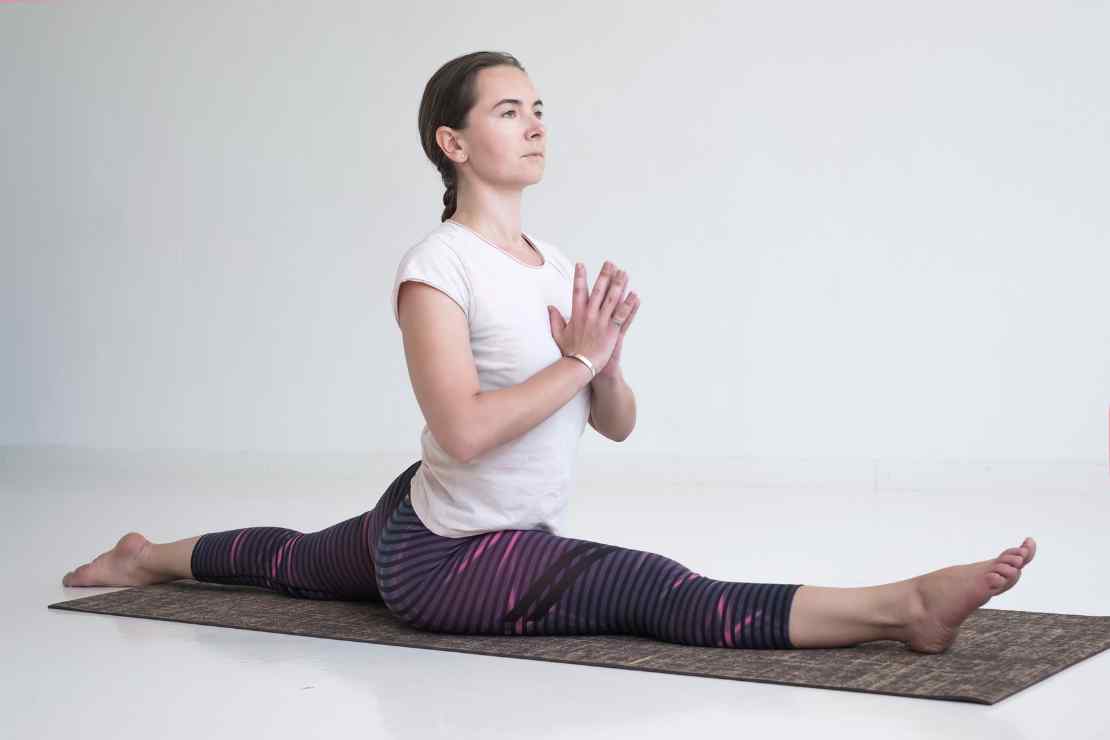
Hanumanasana Yoga Pose – commonly called the front split or Monkey Pose – is a deep, full-range front split where one leg extends forward and the other extends backward, creating a straight line from heel to heel. The name comes from the Hindu deity Hanuman, famous for his epic leap in the Ramayana. Practicing Hanumanasana recreates that spirit of courage, surrender, and reaching beyond perceived limits.
Name, Meaning & Myth
“Hanuman” is the mythic monkey-god, and “asana” means posture. Together, Hanumanasana Yoga literally celebrates the leap – but in the body it becomes a methodical, mindful opening of the hips, hamstrings, and hip flexors.
Physical Description of the Pose
In Hanumanasana, the front leg is straightened forward with the knee facing the sky, the back leg is extended straight back with the top of the foot on the floor, and the pelvis ideally faces square forward. The torso can be upright, arched, or folded over the front leg, depending on variation and flexibility.
Why Practice Hanumanasana Yoga?
Practicing Hanumanasana is transformative on multiple levels. It’s not just “doing splits”; it’s a gateway to mobility, resilience, and introspection.
Physical Benefits
- Deep hamstring and hip flexor flexibility. Hanumanasana Yoga targets both front and back of the hip complex.
- Improved posture and pelvic alignment.
- Increased strength in the quadriceps and glutes as they stabilize the pelvis in the split.
- Better circulation to the legs and pelvic region.
- Enhanced range of motion for walking, running, and athletic activities.
Mental & Emotional Benefits
- Confidence and a sense of accomplishment when you progress.
- Release of emotional tension – hips store stress; Hanumanasana Yoga helps soften that.
- Patience and humility are learned through incremental progress.
Spiritual & Symbolic Benefits
- A reminder to take calculated leaps in life – courage + preparation.
- Deepens devotion and concentration in traditional yoga settings.
Anatomy – What’s Being Stretched & Strengthened
Understanding anatomy helps you practice safely.
Hamstrings
The front leg’s hamstrings must lengthen significantly. If they’re tight, the pelvis will posteriorly tilt and the lower back will round.
Hip Flexors & Quadriceps
The back leg’s hip flexors (especially the psoas) and quadriceps receive a strong stretch – a common source of lower-back tension when neglected.
Pelvis, Core & Back
A stable, neutral pelvis and an engaged core protect the lumbar spine. Without core engagement, the lower back takes excessive strain.
Preparatory Sequence for Hanumanasana
Rushing into splits invites injury. Prepare with a focused sequence.
Warm-up Routine (Dynamic + Static)
- 5–10 minutes of light cardio or sun salutations to increase blood flow.
- Dynamic leg swings front-to-back and side-to-side (10–15 each).
- Gentle spinal twists to mobilize the torso.
Key Preparatory Poses
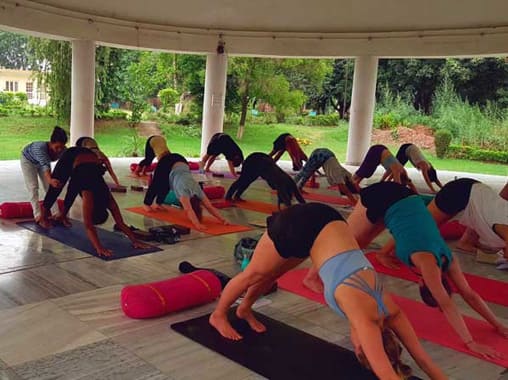
- Downward-Facing Dog (Adho Mukha Svanasana) – hamstring opener.
- Low Lunge (Anjaneyasana) – stretches hip flexors.
- Lizard Pose (Utthan Pristhasana) – deep hip opening.
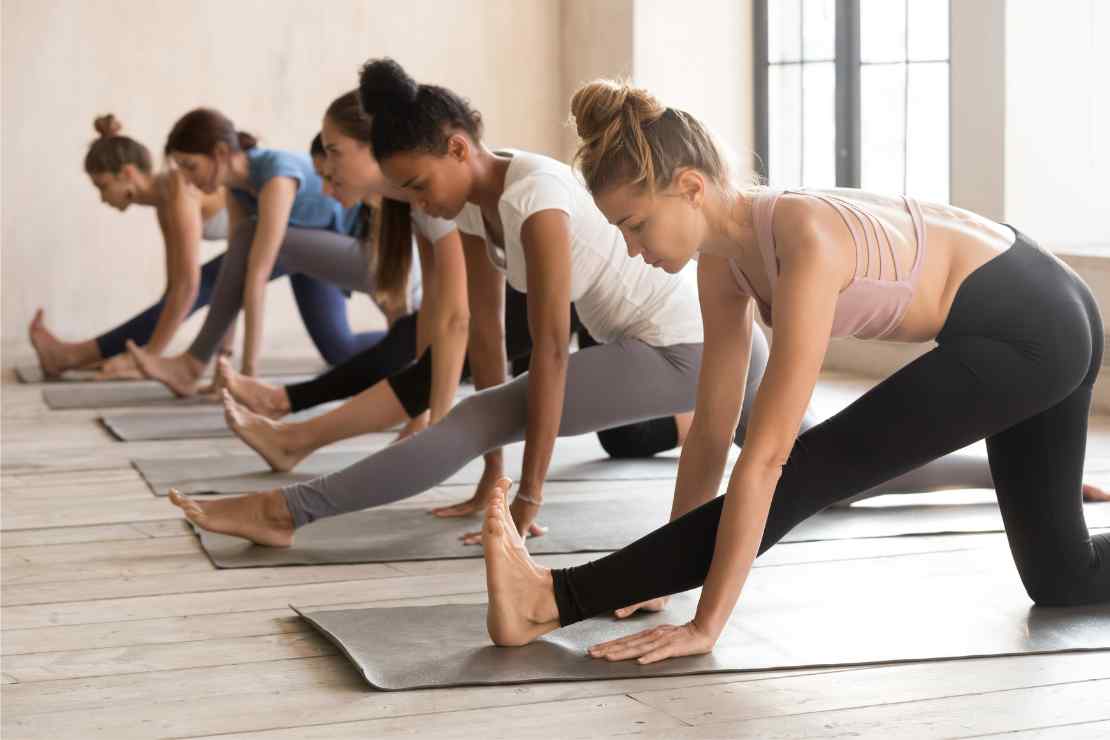
- Half Split (Ardha Hanumanasana) – targeted hamstring lengthening.
- Reclining Hand-to-Big-Toe (Supta Padangusthasana) – controlled hamstring work.
Practice these for at least 10–15 minutes before attempting Hanumanasana Yoga.
Step-by-Step Instructions for Hanumanasana Yoga
Entry from Low Lunge
- Start in Anjaneyasana (low lunge) with the front knee stacked over the ankle.
- Square your hips forward; engage your core.
Sliding into the Split
- Tuck the toes of the back foot and begin to straighten the front leg, sliding the front heel forward and the back knee backward simultaneously. Move slowly – focus on micro-adjustments rather than a single big push.
- Place blocks under your hands or pelvis as needed for support.
Alignment Cues
- Keep hips facing forward-if the front hip opens to the side, use blocks or stop more upright.
- Avoid collapsing in the lower back; imagine lengthening from the tailbone through the crown of the head.
- Activate the quadriceps of both legs to protect the knee joints.
How Long to Hold
- Begin with 20–45 seconds per side if you’re working toward the pose. As you grow comfortable, hold up to 2 minutes, always breathing steadily.
Exiting the Pose Safely
- Bend the front knee slightly and carefully slide back into a lunge, then return to a neutral, hip-squared position. Rest and repeat on the other side.
Common Mistakes & How to Fix Them
Overreaching Into Hamstrings
Problem: You chase the floor with your pelvis rather than lengthening through the spine.
Fix: Use a block under the pelvis or hands and keep the chest lifted. Focus on straightening the leg with control, not force.
Twisted or Dropped Hips
Problem: One hip turns out, reducing the effectiveness of the stretch and stressing the lower back.
Fix: Place a block under the front hip or strap around the thighs to draw them square. Micro-adjust until the hips align.
Collapsing the Spine
Problem: Hyperextending or rounding the lower back.
Fix: Engage the core and tilt the pelvis slightly forward to create neutral lumbar support.
Props, Modifications & Variations
Using Blocks and Bolsters
- Place blocks under your hands for balance.
- Use a bolster or folded blanket under the front or back hip to ease the stretch.
Ardha Hanumanasana (Half Split)
- A beginner-friendly version; from a low lunge, shift back and fold over the front leg with the back knee down. Excellent for incremental hamstring work.
Supported Full Split
- Stack blocks under the hips at different heights to support a gradual descent.
Advanced Variations
- Add a backbend and reach the arms overhead for a deeper chest opening.
- Experiment with hands clasped behind the back to increase shoulder mobility while in the split.
A Progressive 8-Week Plan to Work Toward Splits
(Brief sample – repeat, adjust intensity as needed)
Weeks 1–2: Daily 10–15 minute hamstring/hip routine. Focus on mobility and breath.
Weeks 3–4: Add Ardha Hanumanasana holds (30–60s), 3x per side. Strengthen your glutes and core twice a week.
Weeks 5–6: Begin sliding deeper with blocks; hold supported splits for 45–90s. Add eccentric leg lowering drills.
Weeks 7–8: Attempt assisted full split holds with bolsters; maintain strength training and recovery.
Consistency and respecting pain signals are essential.
Breath, Mindset & Pain vs. Discomfort
Breath Techniques
- Use slow, even inhales and exhales.
- Try 4–6 second inhales and 4–6 second exhales to soften the nervous system and allow tissues to release.
Mindset & Visualization
- Visualize gradual lengthening rather than forcing. Picture the hips opening like a door slowly swinging wide.
- Celebrate small wins-half an inch deeper is progress.
Red Flags: Injuries & When to Stop
- Sharp pain, popping in the joint, or radiating pain down the leg (sciatic signs) – stop immediately and consult a professional.
Tips for Deepening Your Splits Faster & Safer
Strength + Mobility Combo
- Don’t only stretch. Strengthen the stabilizers: glutes, hamstrings eccentrically, and core. Strong muscles protect and support a greater range.
Frequency & Recovery
- Short daily sessions (10–20 minutes) beat occasional long sessions. Allow 48 hours of recovery for very intense attempts.
Cross-training
- Add foam rolling, light plyometrics, and hip mobility work. Include posterior chain strengthening like Romanian deadlifts or bridges if appropriate.
Integrating Hanumanasana into Your Yoga Routine
Short Flows & Full Practice Sequences
- Insert Hanumanasana after dynamic warm-ups and before deep forward folds.
- Pair it with backbends (to counter hip flexor stretching), twists (to release lower back), and restorative poses afterward (legs up the wall, supported child’s pose).
Contraindications & Who Should Avoid or Modify
- Recent hamstring tears, hip labrum tears, knee instability, or acute lower back injuries should avoid deep splits.
- Pregnant practitioners should modify-hip openings are fine, but full splits may be uncomfortable.
- Older practitioners or those with osteoporosis should be cautious and use props.
Conclusion
Hanumanasana Yoga is a richly rewarding posture that blends strength, flexibility, and mental discipline. Whether your goal is to achieve the full front split or simply to unlock the hips and relieve lower-back tension, a steady, anatomically informed practice will get you there. Use props, respect pain signals, strengthen around the joints, and cultivate patience. The leap of Hanuman is a metaphor: courage + preparation = progress.
FAQs
How often should I practice Hanumanasana Yoga to see real progress?
Aim for short daily sessions (10–20 minutes) focusing on hamstrings, hip flexors, and glute strength. Consistency beats intensity – 3–6 times a week with active recovery days yields steady progress.
Is it normal to feel tightness or emotional release in my hips while doing Hanumanasana?
Yes – physical tightness and emotional release often go together. Hips hold tension; gentle, mindful stretching with deep breathing can bring both physical and emotional relief.
What’s safer: pushing into the split or using blocks and supporting the pelvis?
Using blocks and progressive support is safer and more sustainable. Pushing can injure hamstrings or hip joints. Build mobility with support and strengthen the surrounding muscles concurrently.
Can Hanumanasana Yoga improve athletic performance?
It can improve stride length, hip mobility, and reduce injury risk when paired with proper strength work – useful for runners, dancers, and martial artists.
If I have a previous hamstring injury, can I still work toward Hanumanasana?
You should proceed cautiously under professional guidance. Emphasize eccentric strengthening, gradual range-of-motion work, and avoid sharp pain or forceful bouncing.